
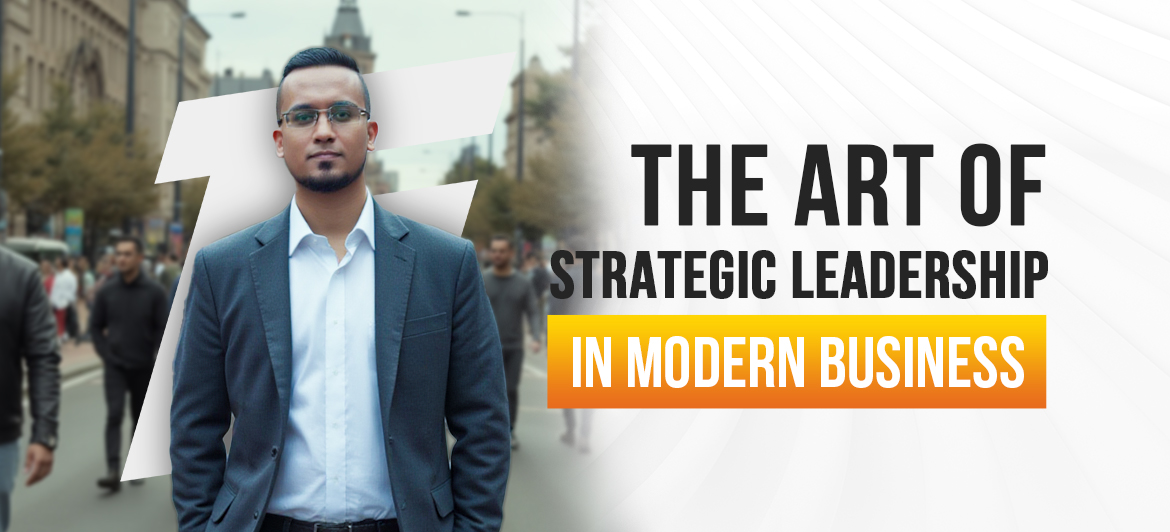
Leadership in the modern world is no longer defined by authority; it is defined by adaptability. The speed of change in today’s business landscape has forced every CEO, founder, and leader to evolve from managing people to mastering strategy. True leadership now requires not only the ability to lead teams but also the ability to anticipate change, manage uncertainty, and make decisions that balance both vision and practicality.
When I think of strategic leadership, I think of alignment. It is not enough for a company to have goals. Those goals must align with a larger mission, and every action must align with both. As the head of TI Global, I see my role not as someone who dictates direction but as someone who ensures that every decision, every project, and every partnership serves the long-term purpose of the organization.
Understanding the modern landscape
The modern business world is a moving target. Technology shifts faster than strategy, and consumer expectations change overnight. A leader who cannot adapt becomes obsolete, no matter how talented they are. Strategic leadership begins with awareness, awareness of markets, people, and self.
When I first expanded TI Global beyond its initial ventures, I quickly learned that what worked before would not work forever. I had to shift my focus from being hands-on in operations to being hands-on in direction. I had to stop managing tasks and start managing priorities. The modern CEO must act less like a commander and more like a conductor someone who orchestrates multiple moving parts into harmony.
This requires constant learning. I read, observe, and question everything. I watch how different industries evolve because innovation rarely happens in isolation. Sometimes the best strategy for an education company can come from studying a tech firm. Cross-industry curiosity keeps leadership sharp.
Building strategy from clarity, not complexity
One of the most common mistakes leaders make is mistaking complexity for sophistication. In my experience, the best strategies are always the simplest ones. A clear direction beats a complicated plan every time. Clarity allows teams to move faster and make better decisions even in your absence.
At TI Global, our strategic framework revolves around three questions:
- What is the long-term purpose behind this decision?
- How does it strengthen our people and our systems?
- What measurable value will it create in the next twelve months?
If an initiative doesn’t answer these three questions clearly, it doesn’t move forward. Strategy is not about doing everything possible, it’s about choosing what truly matters.
Another aspect of clarity is communication. I learned that even the most brilliant strategy fails if people don’t understand it. Communication is not about making announcements; it is about creating alignment. Every leader must ensure that their message is so clear that it becomes part of the team’s language. When every employee can explain the company’s mission in their own words, you know your strategy has become culture.
The balance between vision and execution
A strategic leader must constantly balance imagination and implementation. Vision without execution is a dream; execution without vision is chaos. The best leaders master both.
I divide my time between thinking long-term and acting short-term. Long-term thinking gives me direction, while short-term action gives me progress. I schedule weekly reviews with my core teams to evaluate execution, but every month I take a step back to evaluate direction. This rhythm keeps us grounded in action but guided by vision.
When running multiple ventures under TI Global, I learned that each company requires a unique approach, but all must align with one shared philosophy and growth with purpose. That philosophy is what keeps our businesses connected even as they operate in different industries and regions.
Strategic leadership means you must know when to zoom in and when to zoom out. Too much involvement creates dependency; too much distance creates disconnection. Balance comes from trust, trust in your systems and trust in your people.
Decision-making in uncertain times
Every leader faces moments where data is incomplete and risks are high. Strategic leadership is not about avoiding risk; it is about managing it intelligently. I have learned to make peace with uncertainty. The goal is not to eliminate it but to prepare for it.
In times of uncertainty, I follow one rule, slow down the decision, not the progress. Gather the right information, consult the right people, but keep the momentum alive. Indecision is often more dangerous than a wrong decision. When you move with purpose, even your mistakes become lessons that strengthen the next move.
The pandemic years tested every leader’s ability to adapt. I saw companies collapse not because their products failed but because their leadership froze. Strategy is not about predicting the future; it is about staying flexible enough to win no matter what the future brings.
Building leaders, not followers
One of the most valuable lessons I’ve learned is that real success as a CEO comes when you create other leaders. The strength of an organization is measured not by how much the leader can do, but by how much the team can do without constant supervision.
At TI Global, I invest heavily in leadership training, mentorship, and empowerment. Every manager is encouraged to think like an owner. That shift in mindset changes everything. When people feel ownership, they stop waiting for instructions and start solving problems.
I also encourage independent decision-making. I would rather have a team that makes ten small mistakes trying to grow than a team that makes none because they were afraid to act. Fear kills initiative. Trust builds it.
Leadership is not about having all the answers; it’s about asking the right questions. I train my managers to think critically, to anticipate consequences, and to communicate effectively. These qualities turn good employees into future leaders.
The importance of emotional intelligence
In the modern world, emotional intelligence has become as important as technical skill. Strategy is not only about numbers and systems, it is about people. A CEO who cannot understand emotions cannot lead effectively.
I make it a priority to know my teams beyond their job titles. Understanding their motivations, challenges, and personal goals helps me connect strategy to meaning. When people see how their work contributes to something larger, their performance naturally improves.
Empathy also helps resolve conflict faster. Instead of reacting, I try to listen first. Many issues disappear the moment people feel understood. Emotional intelligence builds trust, and trust is the foundation of every great company.
Measuring success beyond numbers
Financial growth is important, but it is not the only measure of success. Strategic leadership requires measuring impact on people, communities, and the future. Every initiative we undertake at TI Global must create value beyond profit.
When I look at success, I ask three questions:
- Did this make our people better?
- Did this strengthen our reputation for integrity?
- Did this bring us closer to our long-term vision?
If the answer is yes, then it’s a success, even if the numbers are not yet perfect. Short-term profits mean nothing if they come at the cost of long-term trust.
The future of leadership
As we move further into a world driven by technology, AI, and automation, the role of leadership will become even more human. Data will guide decisions, but empathy will guide direction. Leaders will no longer be defined by what they control but by what they enable.
Strategic leadership will be about creating adaptable organizations, companies that can evolve without losing their soul. The best CEOs will be those who can combine innovation with intuition.
Final reflection
Leadership is not a destination; it is a discipline. You never arrive, you keep evolving. Every new challenge demands a better version of yourself.
When I look at what we have built at TI Global, I realize it was not just a result of vision but of strategic leadership practiced daily. It is about making thousands of small, intelligent decisions that align with one big purpose.
The art of strategic leadership lies in finding balance between confidence and humility, between ambition and patience, between logic and heart. When those are aligned, leadership becomes effortless, and success becomes natural.