
Every dream begins with a vision, but not every vision becomes reality. The space between imagination and execution is where most people give up. Over the years, I have learned that turning vision into reality is not about luck or timing, it is about discipline, patience, and relentless consistency.
When I started building what would later become TI Global, my vision was clear, I wanted to create a platform that could operate across industries and countries, uniting education, technology, and care under one ecosystem. But clarity of vision was only the first step. Execution was the real test.
The birth of a vision
A vision is not just a goal; it is a conviction. It is something you see so vividly in your mind that it almost feels real long before it exists. When I was living in Bangladesh, I often imagined a company that could bridge opportunities between nations, helping students study abroad, helping businesses grow through digital transformation, and helping communities through support services.
I would write down ideas daily, not because I had the resources to execute them, but because I wanted to keep the fire alive. I believe the first phase of any vision is protection. You must protect it from doubt, yours and others’. Not everyone will see what you see, and that is perfectly fine. Vision is meant to be seen by the visionary first.
When I moved to Australia, I carried that same belief with me. I had nothing certain except direction. But that direction guided every decision that came after.
From vision to structure
Once a vision becomes clear, the next step is to give it structure. Many people have dreams, but few translate them into actionable plans. The gap between “I want to build something” and “I am building something” is filled with systems.
I began mapping out what TI Global could become. The first practical structure started with Optek International, focusing on education and migration services. I saw how powerful it could be to guide students globally and help them transition into meaningful careers. But for the idea to grow, it needed more than passion. It needed systems, compliance, and partnerships.
Execution requires frameworks. I built operation manuals, marketing plans, and standard procedures. That structure gave confidence to partners and investors. Vision gets attention; structure gets trust.
Turning ideas into action
One of the most important lessons I’ve learned is that execution doesn’t happen through motivation, it happens through habit. The energy of excitement fades; the discipline of action stays.
In the early days of Delco IT, I had hundreds of creative ideas for digital services. But I learned quickly that not all ideas deserve equal energy. I began filtering them through one question: “Will this move us closer to the vision?” That filter saved time, energy, and focus.
Execution is not about doing everything, it is about doing the right things in the right order. You cannot climb ten steps at once; you climb one and repeat. The most successful projects I’ve led followed this principle, small, consistent steps executed with precision.
The role of patience
When you build something meaningful, results rarely come quickly. There were months when progress felt invisible, especially during the foundational phase of TI Global. But I learned to respect slow growth. Slow growth builds strong roots.
Patience is one of the most underrated business strategies. It gives you the ability to stay focused when others are distracted by short term results. I used to track progress obsessively in the early days. If something didn’t grow fast enough, I would get frustrated. Now, I understand that consistency compounds. What looks stagnant in a month often transforms over a year.
Every structure I built, from education systems at Optek to tech automation at Delco, took time to stabilize. But that patience paid off. Today, each of those ventures operates with autonomy and efficiency because they were not rushed.
Managing the gap between vision and reality
Every entrepreneur faces what I call “the gap.” It is the painful space between what you see in your head and what exists in front of you. That gap can break your spirit if you don’t manage it well.
When I first imagined TI Global as a multinational group, the reality was just a small office and a few committed people. The difference between the dream and the day to day operations was huge. It was discouraging at times, but I learned to measure progress, not perfection.
You don’t need to reach your final vision immediately, you just need to get closer every day. Each milestone, no matter how small, is proof that your vision is alive.
To bridge the gap, I broke large goals into actionable weekly and monthly targets. I focused on controllable factors, the calls, meetings, systems, and improvements that directly influenced results. You can’t control the outcome, but you can control your input.
The power of alignment
Execution becomes easier when your team aligns with your vision. You cannot build an empire alone. I learned that I could have the best strategies in the world, but without people who understood the “why,” those strategies would never reach full potential.
I make it a habit to repeat our purpose often, not because people forget, but because repetition builds culture. At TI Global, I want every employee to know not just what they are doing but why it matters. When your team feels connected to the vision emotionally, their execution becomes passionate, not mechanical.
Alignment also means delegation. I used to try to do everything myself, from client handling to content planning, but that was unsustainable. I learned that trusting others is not weakness; it is wisdom. Delegating with clear systems and accountability is what multiplies execution power.
Handling failure within execution
No vision ever unfolds exactly as planned. There will be missteps, rejections, and unexpected shifts. The key is to see failure as feedback, not finality.
During one phase of expansion, we launched a service model that didn’t perform as expected. The logical reaction was disappointment; the strategic response was adaptation. We analyzed why it didn’t work, adjusted the model, and relaunched with new positioning. That version became one of our strongest divisions later.
Every failed plan teaches you how to execute better next time. Failure refines execution if you let it.
The emotional side of execution
Execution is often romanticized as mechanical precision, but there’s a deeply emotional side to it. Every late night, every tough decision, every conversation where you fight to keep your team motivated, these moments test your resilience.
I’ve learned to manage emotions not by suppressing them but by channeling them into purpose. The frustration, fear, and exhaustion that come with leadership are all energy. When directed correctly, that energy builds momentum.
Balancing flexibility and discipline
As a CEO, I’ve learned that execution requires flexibility without losing direction. You can’t control every variable, but you can control how you respond. Markets will change, people will shift, and systems will evolve, but your vision must stay constant.
Discipline keeps you consistent; flexibility keeps you relevant. The art of leadership is maintaining both at once.
Final reflection
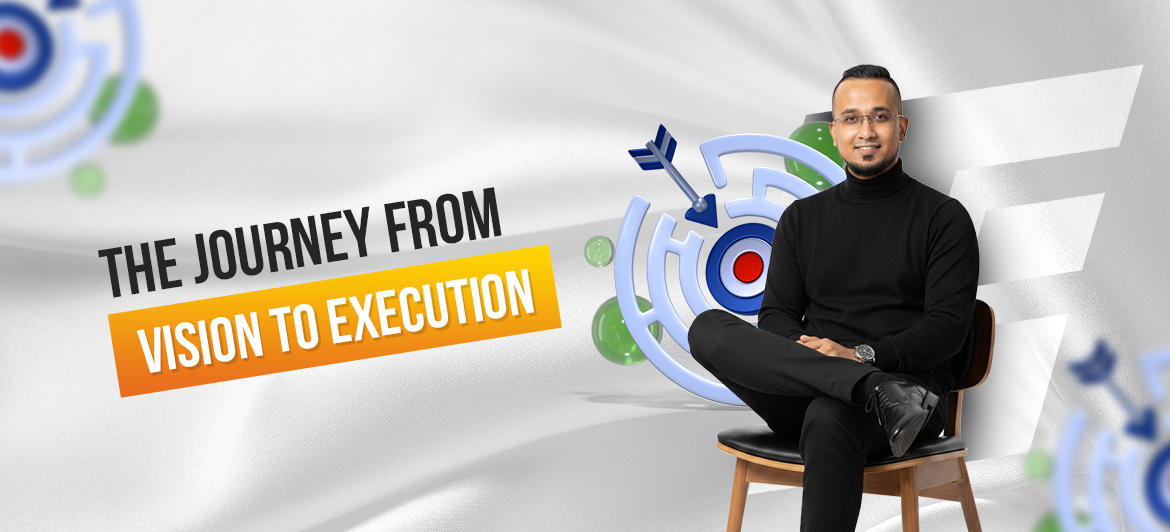
The journey from vision to execution is not glamorous. It’s filled with uncertainty, long hours, and quiet battles that no one sees. But it is also where growth, fulfillment, and legacy are built.
A vision without execution is fantasy. Execution without vision is chaos. But when both come together, you create impact.
Every part of TI Global today, every student guided, every campaign delivered, every life supported, is proof that dreams can become systems, and systems can become legacies.
The secret is simple, dream boldly, plan clearly, and execute daily. Vision gives you the destination; execution gives you the map. Follow both, and success will follow you.