
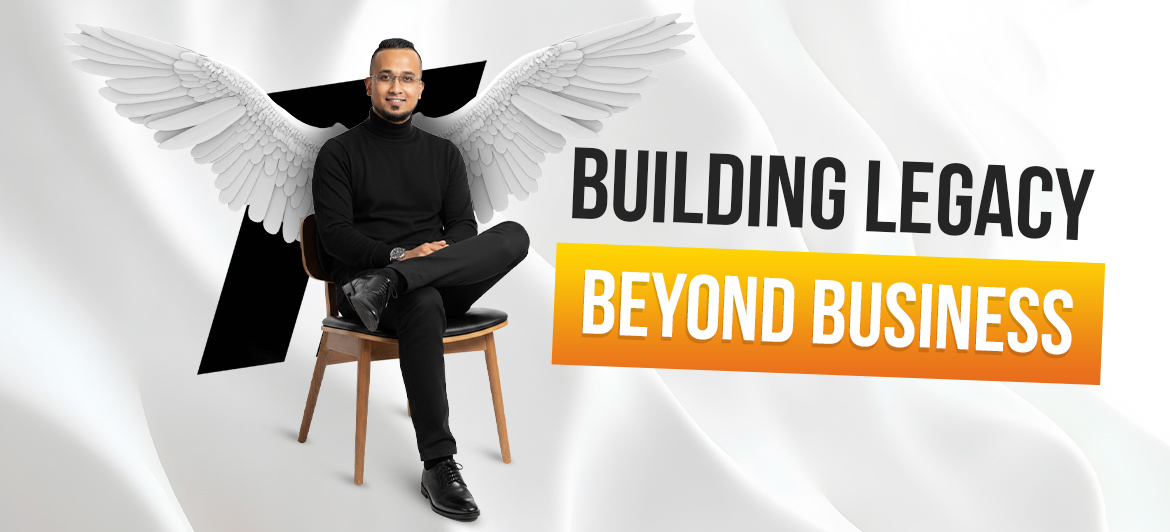
Every entrepreneur begins by building a business, but a few evolve to build a legacy. For years, I was focused on building companies, Optek International, Delco IT, Dimensions Support Australia, and later the broader TI Global Group. But as the years went by, I realized something important: companies generate profit, but legacy generates purpose.
A business can survive without you; a legacy continues because of you. Legacy is what remains long after the profits, awards, and buildings fade. It is the impact that outlives the enterprise.
Understanding the difference between success and legacy
Success is about what you achieve. Legacy is about what you leave. In the early years, I chased success like most people do, more clients, bigger offices, higher numbers. I thought that was progress. It was, but it was temporary.
The shift happened when I began asking deeper questions. What would remain if all my businesses ended tomorrow? Would I have built something that made lives better or simply generated revenue? That realization changed my definition of achievement.
Now, I no longer measure success by size or scale. I measure it by sustainability and significance. A company is successful when it grows; a legacy is successful when it gives.
Building legacy through purpose
Every organization under TI Global carries a deeper purpose. Optek International was built to transform lives through education. Delco IT was created to empower entrepreneurs and small businesses through technology. Dimensions Support Australia was founded to provide care, dignity, and opportunity for people who need it most.
Each of these ventures represents more than business sectors, they represent causes. When a student graduates, a small business grows online, or a client receives quality care, that is legacy in motion.
Legacy begins when profit becomes a by product of purpose. When your work starts serving others naturally, you know you are building something that will last.
Shifting focus from ownership to impact
In the early days, I wanted to own everything I built. Now, I want to share it. Ownership satisfies ego; impact satisfies soul. I learned that the more you share opportunities, knowledge, and leadership, the more your legacy expands.
Today, my goal is not to be the center of TI Global, my goal is to build leaders who can continue the mission. Every decision I make now involves one question: will this outlast me If the answer is yes, it is worth doing.
Legacy is not about control. It is about contribution.
Investing in people, not just profit
The most powerful way to build legacy is through people. Systems evolve, technology changes, markets fluctuate, but people carry values forward.
At TI Global, I focus on developing leadership from within. I want every manager, advisor, or executive to think like an owner. I train them not just to meet targets, but to understand purpose. When people grow in mindset, they grow in responsibility.
Many of the people who started with me years ago now run teams of their own. Watching them succeed brings me more pride than any financial milestone. Leadership duplication is the essence of legacy.
The role of values in longevity
Values are the invisible architecture of every lasting organization. Integrity, empathy, and discipline, these are not slogans; they are survival tools. Markets reward innovation, but history remembers integrity.
I have seen companies rise faster than mine and disappear within a few years. The difference is values. We may not always be the fastest, but we have always been consistent. People trust TI Global because we never compromise the foundation.
Values are what protect legacy when no one is watching.
Giving back as part of the mission
Legacy extends beyond employees and clients; it includes the community. I have always believed that business must serve society, not just shareholders.
In both Bangladesh and Australia, I support initiatives that help students, small entrepreneurs, and underprivileged families. Some of these efforts are personal, others are through partnerships. The form doesn’t matter; the intention does.
Giving back keeps you human. It reminds you why you started in the first place, not to escape struggle, but to help others overcome theirs.
Building legacy across borders
Because I’ve lived and worked in different countries, from Saudi Arabia to Bangladesh to Australia, I’ve seen how legacy takes different shapes. In Bangladesh, it means creating employment and opportunity. In Australia, it means community trust and contribution. In the Middle East, it means respect and credibility.
The goal is to connect all these pieces into one global story. TI Global’s name itself represents that, an ecosystem that unites people, industries, and ideas across borders.
Legacy doesn’t belong to a single place; it belongs to humanity. The more you expand your mindset, the bigger your impact becomes.
Transferring knowledge
Another way I build legacy is through teaching. I share what I have learned, the systems, failures, and insights, with those coming after me. Knowledge that stays locked within you dies with you. Shared knowledge multiplies.
When I mentor younger professionals, I don’t just talk about success. I talk about mistakes, recovery, and mindset. I want them to understand that greatness is built through consistency, not luck.
The next generation doesn’t need perfect examples; they need honest ones. That honesty becomes part of your legacy.
Maintaining integrity as the foundation
Integrity is what keeps legacy clean. As TI Global grows, I make sure that transparency and ethics remain at the centre. Legacy built on manipulation collapses; legacy built on trust endures.
I still personally review major partnerships to ensure alignment. I would rather lose an opportunity than win it the wrong way. That consistency reinforces culture across all teams.
Integrity is not just about what you do publicly, it’s how you behave when no one notices. That quiet consistency is what people will remember long after you are gone.
Legacy within leadership
True legacy is not about how many people work for you, but how many people grow because of you. A good leader creates followers; a great leader creates leaders.
At TI Global, I tell my teams to lead from where they are. You don’t need a title to make an impact. Leadership begins with responsibility, not rank.
As leaders rise within the organization, they carry forward the philosophy that built it, serve with excellence, lead with empathy, and stay disciplined. That mindset becomes generational.
The personal side of legacy
Legacy is not just professional; it is personal. The way you treat people daily becomes your invisible biography. The way you handle pressure, honor commitments, and support others becomes your true story.
There were times when I had to make difficult decisions that hurt in the short term but protected our values long term. Looking back, those choices defined my reputation more than any deal I signed.
When your values are consistent at work and in life, your legacy becomes one whole story, not separate chapters.Final reflection
Legacy is not built in one grand gesture; it is built in small, consistent actions repeated over years. It is in every handshake, every lesson shared, every life improved, every principle kept.
I don’t want to be remembered for the companies I owned; I want to be remembered for the people I built, the opportunities I created, and the ethics I upheld.
Business fades, but influence stays. That is why I no longer chase success, I cultivate legacy. Because success ends when you do, but legacy begins when you are gone.
The world doesn’t need more successful people; it needs more meaningful ones. That is the mission behind everything I build, to leave something that lasts, something that serves, something that speaks when I no longer can.
That is what I call true legacy.